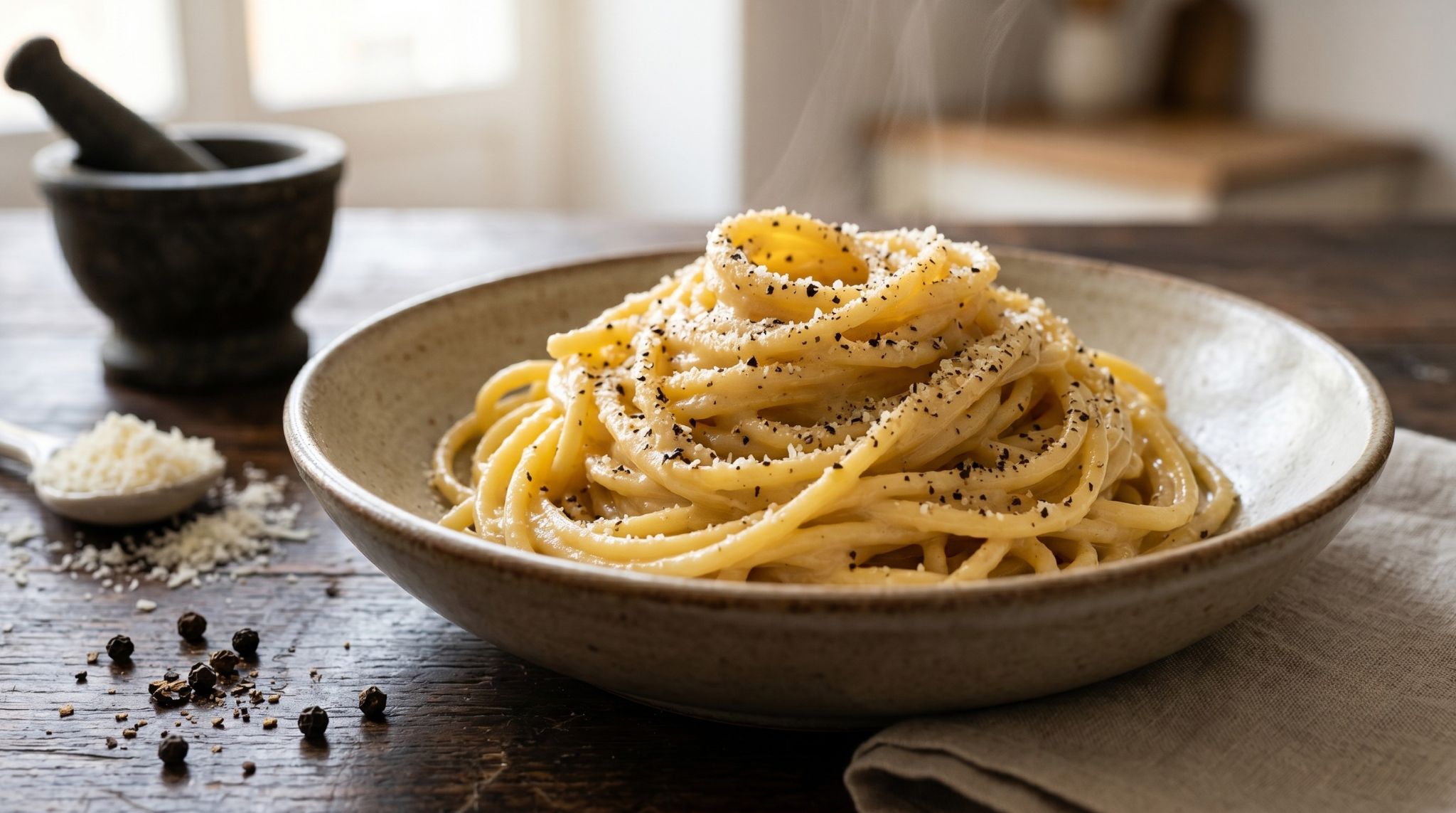
Cacio e Pepe looks deceptive in its simplicity: pasta, black pepper, and Pecorino cheese. Yet, it is famously one of the most feared dishes in traditional Italian cuisine.
Without the right technique, the cheese quickly melts into a clumpy, rubbery ball surrounded by a pool of greasy water. When this happens, many home cooks panic and add heavy cream to smooth it out. But in Italy, adding cream to Cacio e Pepe is a culinary crime.
The secret to a velvety, restaurant-grade Cacio e Pepe sauce isn’t heavy cream—it’s molecular emulsification driven by starchy pasta water. Here is how to master this authentic Roman classic perfectly every single time.
Why Authentic Cacio e Pepe Doesn’t Need Cream
The magic of a true Roman Cacio e Pepe lies in the reaction between starch and fat. When you combine finely grated Pecorino Romano with warm, highly concentrated pasta water, the starches act as a natural emulsifier. This process binds the cheese fat and water together, creating an extraordinarily creamy, silky sauce out of thin air.
Common Mistakes That ruin Cacio e Pepe:
- High Heat: Adding cheese while the pan is over direct heat will instantly curdle the dairy proteins, leaving you with clumps.
- Pre-Grated Cheese: Pre-shredded packaged cheese contains anti-caking agents (like cellulose) that prevent proper melting.
- Pre-Ground Pepper: Bottled black pepper has lost its essential oils. Freshly toasted, crushed whole peppercorns are non-negotiable.
Authentic Cacio e Pepe Ingredients (Serves 2)
- 7 oz (200g) High-quality long pasta (Tonnarelli, Spaghetti, or Bucatini)
- 1.5 cups Authentic Pecorino Romano cheese, finely microplaned (do not use pre-grated plastic tubs)
- 2 tbsp Whole black peppercorns
- Salt (Use sparingly, as Pecorino is naturally salty)
Step-by-Step Instructions
Serve Immediately: Toss and stir vigorously until a velvety cream coats every strand of pasta. Plate right away with extra freshly cracked pepper.
Toast the Pepper: Crush whole peppercorns with a mortar and pestle or heavy skillet. Toss them into a dry skillet over medium heat for 1–2 minutes until intensely aromatic.
Boil in “Little” Water: Cook the pasta in a smaller pot with half the usual amount of water. This concentrates the starch into a thick, white broth.
Create the Pepper Broth: Ladle 1 cup of starchy pasta water directly into the skillet with the pepper. Let it bubble rapidly to form a spicy base.
Make the Pecorino Paste: In a bowl, mix the finely microplaned Pecorino Romano with a few splashes of warm pasta water. Stir vigorously with a fork until a smooth, thick paste forms (resembling damp sand).
Finish Pasta in the Pan: Transfer the pasta to the skillet 2 minutes before reaching al dente. Toss continuously to absorb the pepper flavor.
The Emulsion (OFF THE HEAT): Turn the stove completely OFF. Wait 30 seconds for the pan to cool slightly, then add the Pecorino paste.